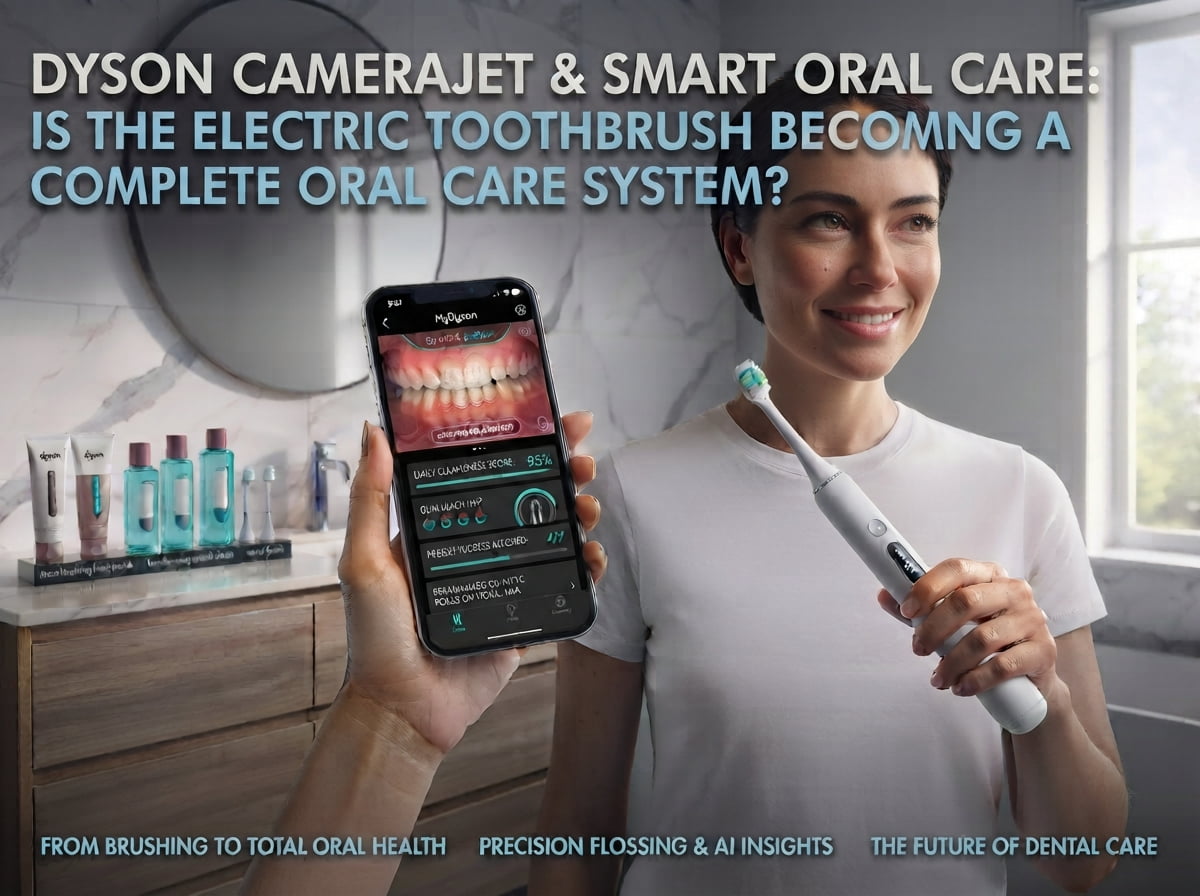
Smart oral care is becoming harder for brands to define because the electric toothbrush is no longer just a brushing tool. Buyers now face a crowded market where modes, vibration speed, and battery life are not enough. I see Dyson CameraJet as a useful signal: the category may be moving toward integrated, data-enabled oral care systems.
Yes, the electric toothbrush is gradually becoming a complete oral care system. Dyson CameraJet highlights this shift by combining brushing, interdental cleaning, imaging, AI or machine learning, targeted fluid delivery, app connectivity, and personalized feedback. The bigger industry story is not one product, but the move from simple cleaning hardware to connected, adaptive oral care technology.
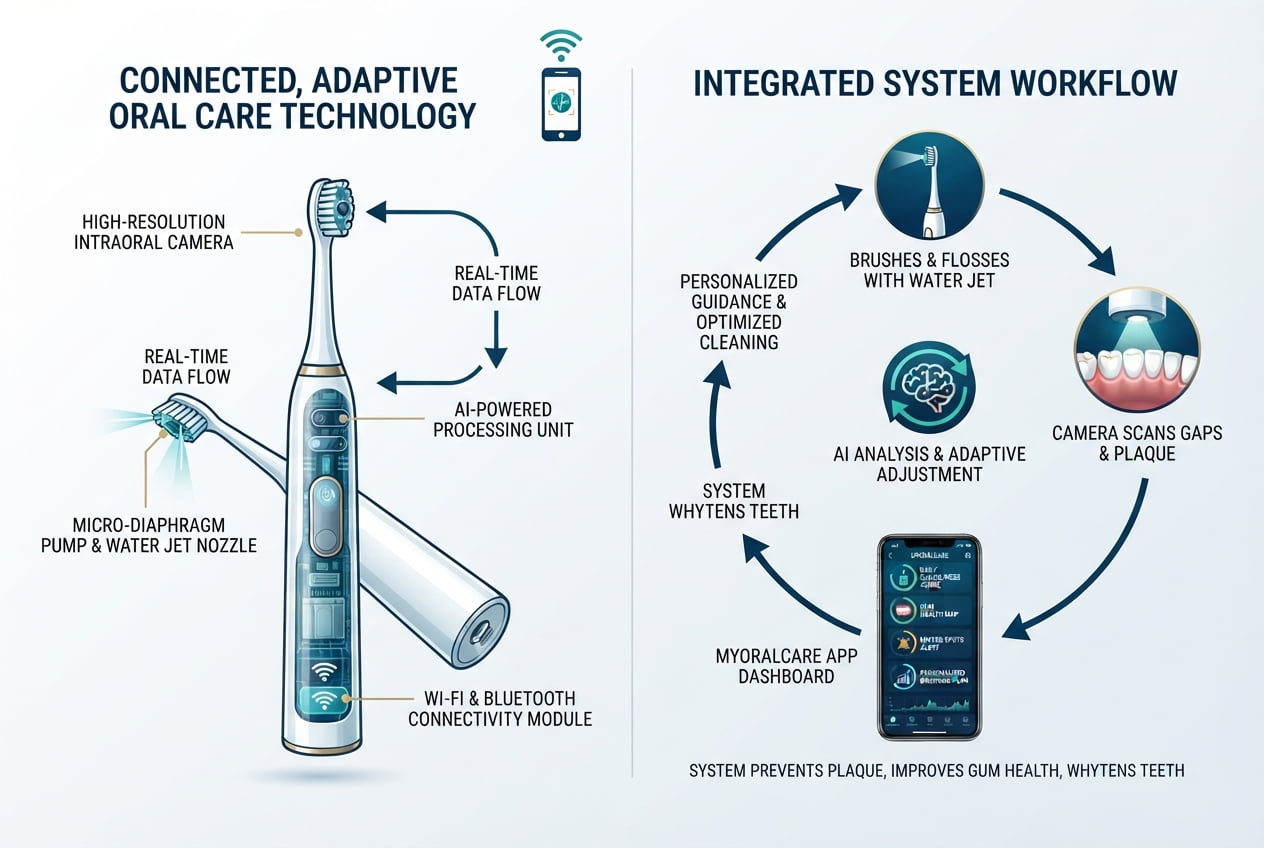
Dyson CameraJet should not be treated as a product that every brand must copy. It is more useful as a case study. It shows how future electric toothbrush innovation may depend less on adding more modes and more on helping users sense, understand, respond, and improve.
Dyson CameraJet Is More Than an Electric Toothbrush in Smart Oral Care?
A traditional electric toothbrush solves one main problem: better brushing. That is still important, but it is not the full oral care experience. Users also struggle with missed areas, interdental plaque, technique, motivation, and consistency. Dyson CameraJet brings attention to these gaps.
Dyson CameraJet appears to go beyond a standard electric toothbrush because it combines brushing with camera-based visibility, AI or machine learning, targeted fluid delivery, app interaction, and personalized guidance. Its importance is not any single feature. Its importance is the system-level integration of multiple functions around one oral care routine.
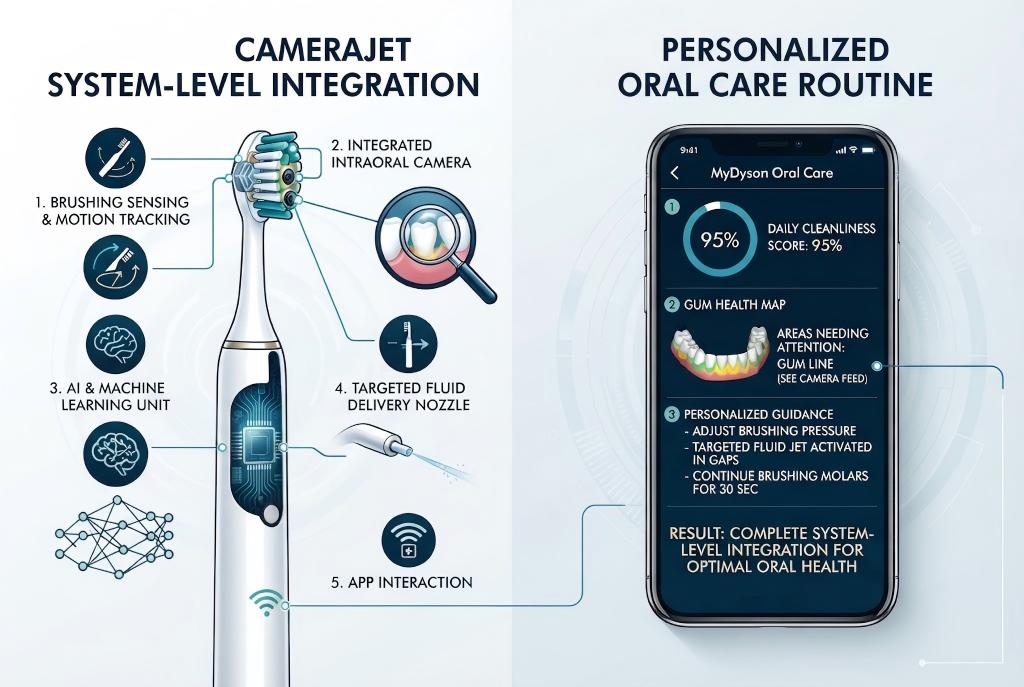
Why the definition is changing
In the past, I would describe an electric toothbrush mainly by motor type, brushing frequency, head movement, battery capacity, waterproof design, and brushing modes. Procurement teams often compared models through a clear checklist:
- Sonic or oscillating movement
- Brush head compatibility
- Battery life and charging method
- IPX waterproof rating
- Noise level
- Handle ergonomics
- Packaging and compliance documents
- Warranty risk and replacement parts
That checklist still matters. However, Dyson CameraJet points to a wider product definition. The device, as described in public discussion, brings together several layers:
| Layer | Traditional Role | Emerging Role in Smart Oral Care |
|---|---|---|
| Brushing | Remove plaque from tooth surfaces | Still core, but part of a larger routine |
| Interdental cleaning | Separate flossing or water flosser step | May be integrated into the same device experience |
| Camera | Not usually included | Helps identify areas or guide behavior |
| AI / Machine Learning | Rare or basic | May interpret usage patterns or visual input |
| Targeted fluid delivery | Usually handled by water flossers | May support directed cleaning action |
| App / Data | Timer and records | Personalized coaching and long-term engagement |
The key idea is simple: real innovation is not adding another brushing mode. Real innovation is building a loop.
Sense → Analyze → Guide → Improve
That loop is what separates a smart electric toothbrush from a complete smart oral care platform.
Why this matters for product teams
For brand owners and product managers, this shift changes the product brief. A next-generation electric toothbrush may no longer be judged only by “how powerful it feels.” It may also be judged by whether it helps the user complete more of the oral care routine with less confusion.
This does not mean every brand should develop a camera toothbrush or an AI electric toothbrush immediately. Camera modules, app development, waterproof sealing, and data-related user experience all add cost and complexity. A mass retail product may need a different roadmap than a premium DTC device.
However, the category direction is clear enough to affect planning. I would expect more brands to evaluate concepts such as:
- Brush + flosser hybrid formats
- App-guided brushing and interdental routines
- Sensors for pressure, angle, or coverage
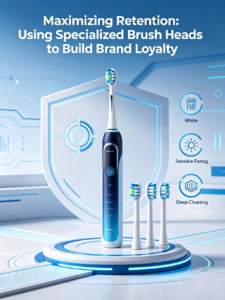
- Consumable systems around brush heads, nozzles, and cleaning solutions
- Personalized oral care programs based on user behavior
The B2B lesson is not “build what Dyson built.” The lesson is: the product boundary is expanding. Brands that understand this earlier can build more defensible differentiation.
From Brushing Device to Smart Oral Care System?
Many electric toothbrushes still compete on familiar features. That competition is becoming difficult because similar claims are everywhere. A buyer sees high-frequency sonic motors, multiple modes, long battery life, and sleek handles across many price points. The problem is not lack of features. The problem is weak differentiation.
The shift from brushing device to smart oral care system means the product is designed around the whole user problem, not only the brushing action. Emerging products combine cleaning, guidance, feedback, software, consumables, and service touchpoints to create a more complete and personalized oral care experience.
Traditional vs. emerging product logic
| Traditional Electric Toothbrush | Emerging Smart Oral Care Product |
|---|---|
| Brushing | Brushing + flossing |
| Fixed modes | Personalized experience |
| Timer | Data-driven feedback |
| Standalone device | Hardware + software |
| Hardware features | Complete ecosystem |
| Manual user judgment | Guided technique improvement |
| One-time device sale | Device + consumables + engagement |
| Basic cleaning promise | Problem-solving oral care journey |
Why feature competition is losing strength
I have seen many product briefs where the first request is simple: “Can we add more modes?” That is understandable. Modes are visible, easy to market, and relatively simple to implement at the firmware level. But for users, more modes do not always mean better results.
A toothbrush with 6 modes may still fail if:
- The user brushes too quickly.
- The user misses molars or gumline areas.
- The user applies too much pressure.
- The user does not clean between teeth.
- The user stops using the app after one week.
- The brush head replacement system is inconvenient.
- The device is too bulky or hard to rinse.
This is why the market is moving from feature competition to problem-solving competition.
What “complete system” really means
A complete oral care system does not need to include every possible technology. It needs to create a connected user journey. For example:
-
The device cleans.
It must still perform well as a brush or cleaning device. -
The device senses.
It may detect pressure, brushing time, angle, location, fluid flow, or visual information. -
The system interprets.
Software or algorithms may turn raw signals into practical feedback. -
The user receives guidance.
The product may recommend a better technique, a replacement head, a flossing step, or a focused cleaning routine. -
The product improves retention.
The app, consumables, and routine design may help the user stay consistent.
This direction creates new opportunities for brands. A brand does not need to be first in every technology. It can win by choosing the right system design for its target audience.
Brand positioning examples
Different market segments may need different smart oral care strategies:
| Brand Segment | Possible Product Direction | Key Procurement Concern |
|---|---|---|
| Premium DTC brand | Connected brush with app coaching | Software reliability and UX |
| Pharmacy or health channel | Brush + water flosser bundle | Compliance and safety documentation |
| Family oral care brand | Multi-user app and child-friendly feedback | Durability and hygiene |
| Travel-focused brand | Compact brush + UV sanitizer case | Battery, waterproofing, portability |
| Private-label retailer | Cost-effective smart electric toothbrush | Stable quality and price control |
For procurement heads, this means supplier evaluation must go beyond unit price. The right electric toothbrush OEM partner should understand system architecture, not only assembly.
What Technologies Are Behind This Smart Oral Care Shift?
New oral care technology can sound complicated, especially when camera modules, AI, sensors, fluidics, and apps appear in the same product discussion. The risk is that teams chase buzzwords instead of solving user problems. I prefer to evaluate the technology stack by its role in the care routine.
The main technologies behind this shift are camera systems, AI or machine learning, sensors, fluidics, connectivity, and mobile apps. These technologies matter because they can create a loop: data leads to understanding, understanding triggers action, action creates feedback, and feedback supports better personalized oral care over time.
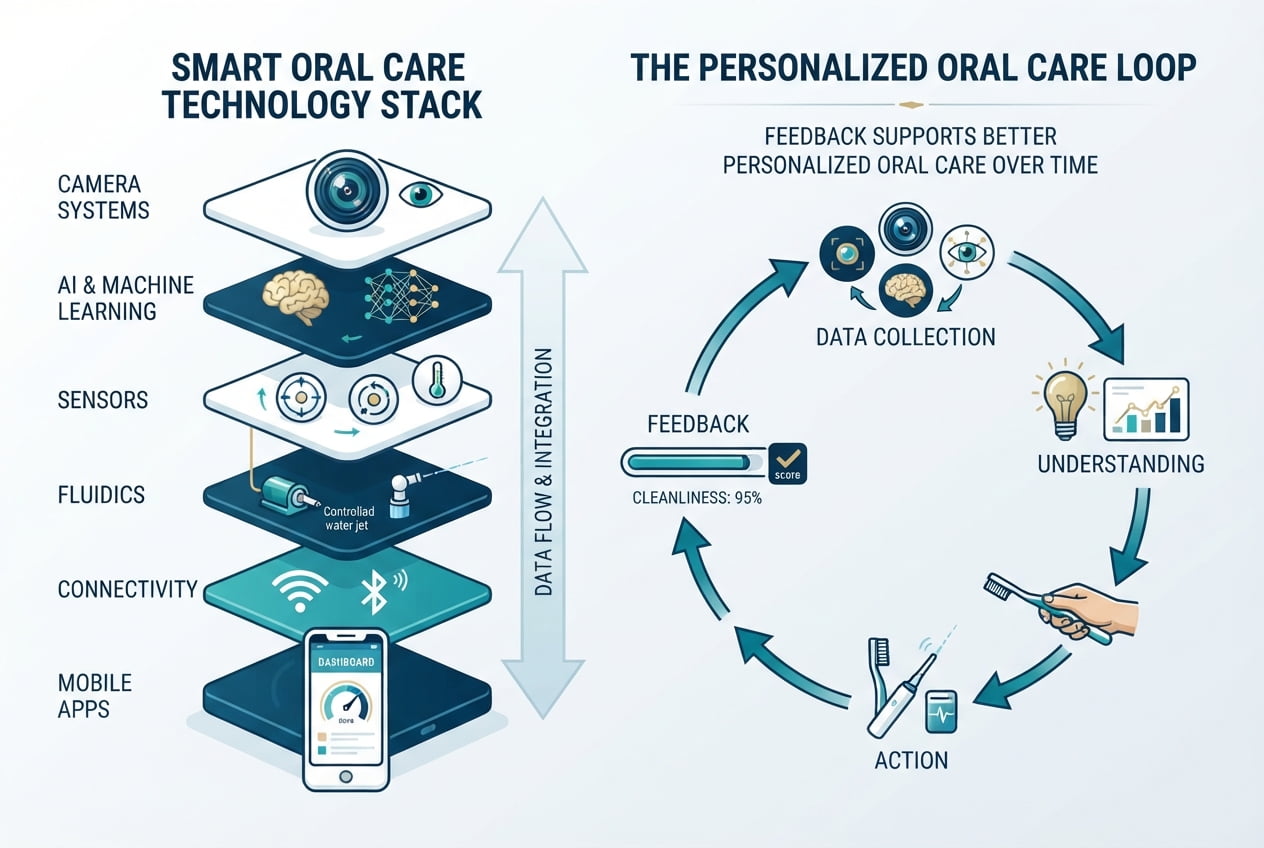
The core logic: Data → Understanding → Action → Feedback
The most useful way to assess a next-generation electric toothbrush is not by counting components. It is by asking what each component contributes to the user journey.
| Technology | What It Can Do | What Brands Must Evaluate |
|---|---|---|
| Camera | Provide visual input or guided viewing | Lens protection, cleaning, waterproofing, lighting |
| AI / Machine Learning | Interpret usage or visual patterns | Accuracy, privacy, app experience, claims control |
| Sensors | Detect pressure, motion, angle, timing | Calibration, durability, false alerts |
| Fluidics | Deliver water or solution directionally | Pump life, leakage risk, nozzle design |
| Connectivity | Transfer data to an app | Pairing stability, firmware updates |
| App | Give guidance and track routines | Retention, UX, localization, support |
Camera and AI: useful only when they guide action
A camera sounds exciting, but a camera alone does not create user value. It must answer a practical question. For example:
- Did the user miss a hard-to-see area?
- Can the system guide brushing position?
- Can the app help the user understand plaque-prone zones?
- Can visual feedback improve motivation?
For B2B buyers, this area requires caution. Any claim related to oral health assessment, diagnosis, or clinical improvement should be reviewed carefully with qualified regulatory and dental professionals. Brands should avoid turning a consumer device into an implied medical diagnostic product unless they have the right evidence and approvals.
Sensors: the quiet foundation of smart electric toothbrush design
Many smart electric toothbrush products start with basic sensors rather than cameras. Pressure sensors, motion sensors, accelerometers, gyroscopes, and usage timers can create useful feedback without excessive cost.
Common sensor-driven features include:
- Pressure warning
- Brushing duration tracking
- Quadrant reminders
- Angle guidance
- Usage frequency records
- Brush head replacement reminders
These features are not as headline-grabbing as AI, but they are practical. They also fit many retail price bands.
Fluidics: the bridge between brushing and interdental cleaning
The inclusion of targeted fluid delivery in discussions around Dyson CameraJet is important because it reflects a broader category convergence. The water flosser and electric toothbrush used to be separate products. In the future, more brands may explore integrated formats.
This creates engineering questions:
- How does the device manage water flow without becoming too large?
- How does the nozzle avoid interfering with brushing comfort?
- How does the product prevent leakage?
- How does the design meet waterproof expectations?
- How does the factory test pump life and seal reliability at scale?
This is where electric toothbrush innovation becomes more manufacturing-intensive. A brush with a motor and PCB is one challenge. A brush with motor, pump, reservoir, nozzle, camera, battery, and app connectivity is a much harder system.
Connectivity and apps: value depends on continued use
An app can help create personalized oral care, but only if users keep using it. I have seen many connected product concepts where the app looks impressive during launch but becomes irrelevant after the first month.
For brands, the app must have a clear purpose:
- It should reduce confusion.
- It should help users improve technique.
- It should make replacement purchases easier.
- It should support multiple users if the product is shared.
- It should provide useful feedback without overwhelming the user.
In short, technology should serve the routine. It should not distract from it.
Why This Matters to Oral Care Brands Building Smart Oral Care Portfolios?
Brands used to compete on visible hardware claims. That approach still works in some channels, but it is becoming easier for competitors to imitate. If every brand offers sonic cleaning, five modes, USB-C charging, and a travel case, the buyer asks a harder question: why this product?
This matters because smart oral care changes the basis of competition. Brands may shift from selling isolated features to solving user problems through integrated cleaning, intelligent sensing, personalization, software, consumables, and ecosystem design. The winning product may not be the most complex one. It may be the clearest and most useful one.
The old competition model
Many oral care brands have historically competed through:
- Brushing modes
- Vibration frequency
- Battery life
- Charging convenience
- Handle design
- Brush head softness
- Waterproof rating
- Retail packaging
- Price and promotion
These are still procurement priorities. A product that fails on battery safety, waterproofing, or brushing comfort will not succeed because it has an app. However, these features are becoming table stakes in many markets.
The emerging competition model
Future product roadmaps may place more weight on:
- Intelligent sensing
- Personalized oral care routines
- Integrated brushing and interdental cleaning
- User experience and habit formation
- Software and firmware stability
- Consumable strategy
- Connected ecosystem design
- Data privacy and claim discipline
This is a strategic change. A brand manager may no longer ask, “How many modes should we add?” The better question may be, “Which oral care problem are we solving better than competitors?”
From feature competition to problem-solving competition
A good product concept should begin with the user problem. For example:
| User Problem | Possible Product Direction |
|---|---|
| Users miss interdental areas | Brush + water flosser bundle or hybrid |
| Users brush too hard | Pressure sensor and visible alert |
| Users lack motivation | App coaching and progress tracking |
| Users travel often | Compact brush with UV sanitizer case |
| Users want whitening support | Brush program + safe whitening accessory |
| Families share devices | Multi-handle or multi-profile system |
This approach also helps procurement teams. When the product brief is problem-led, supplier selection becomes more precise. The buyer can evaluate whether a factory has the right engineering capability, testing plan, and customization flexibility.
What brands should be careful about
Smart oral care can easily become overbuilt. More modules mean more failure points, more quality tests, more assembly steps, and higher after-sales risk. A premium concept may justify that complexity. A mass-market SKU may not.
I would recommend that brand teams evaluate each smart feature using five questions:
- Does the feature solve a real user problem?
- Can the user understand the benefit in five seconds?
- Can the supplier manufacture it consistently?
- Can the brand support the app, firmware, and service needs?
- Can all claims be supported by documentation, testing, and regulatory review?
For oral care brands, Dyson CameraJet is a reminder that differentiation is moving upward. But it is also a reminder that smart features need disciplined product management.
What This Means for Electric Toothbrush OEM and Oral Care OEM/ODM Manufacturers?
For manufacturers, the shift is both an opportunity and a challenge. A traditional electric toothbrush project can already involve many quality risks. When cameras, pumps, sensors, apps, and sealed fluid paths are added, the project becomes a multi-system engineering task. That changes what buyers should expect from an OEM/ODM partner.
This means an electric toothbrush OEM or oral care OEM/ODM manufacturer can no longer be only an assembler. For next-generation smart oral care products, the manufacturer needs to act as a product development partner with capabilities in mechanical design, electronics, sensors, fluidics, waterproofing, DFM, testing, tooling, compliance support, and scalable mass production.
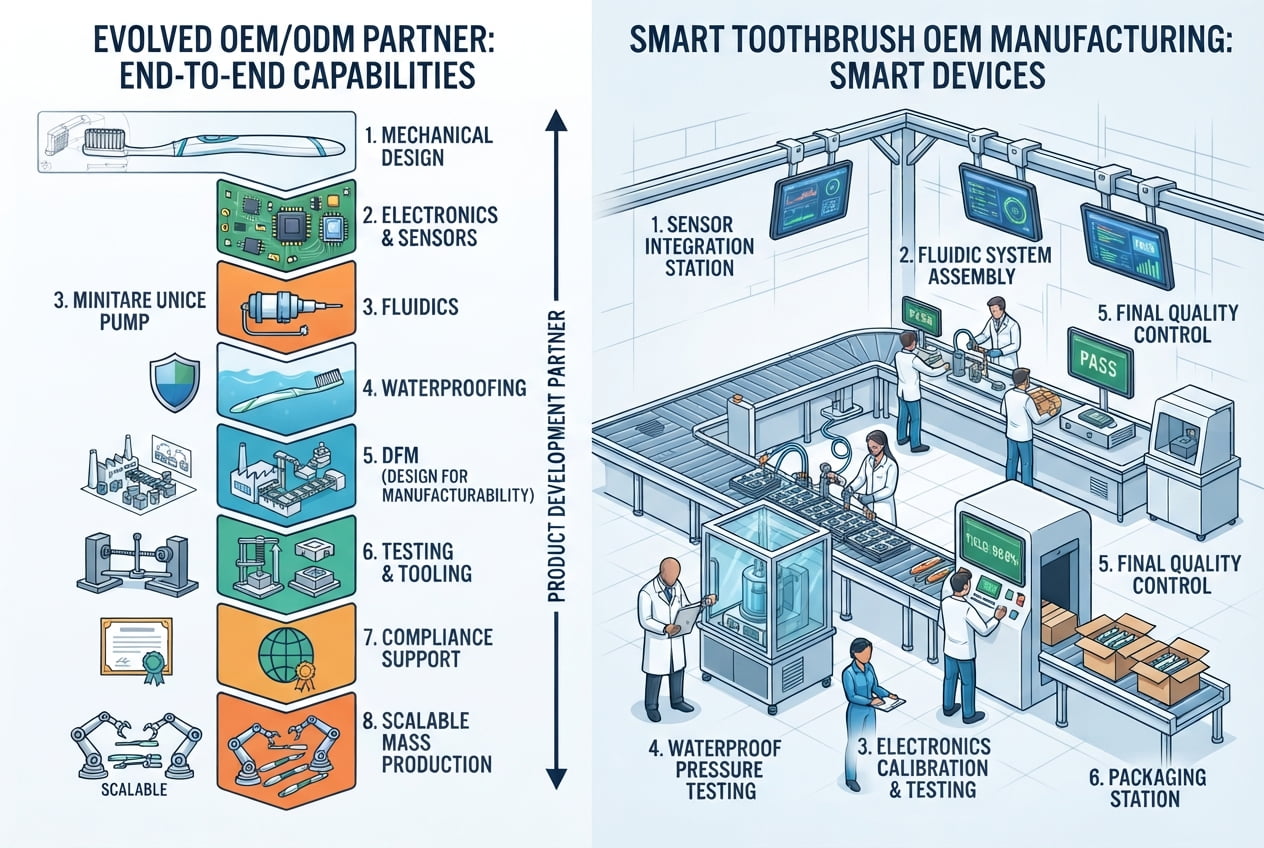
Traditional manufacturing scope
A standard electric toothbrush project may focus on:
- Motor selection
- PCB design
- Battery and charging system
- Injection-molded handle
- Brush head design
- Waterproof structure
- Button and mode interface
- Final assembly
- Basic aging and performance testing
- Packaging and branding customization
This scope is still important. A reliable toothbrush depends on stable motor performance, comfortable ergonomics, good sealing, and consistent brush head quality.
New-generation manufacturing scope
A next-generation electric toothbrush may require a broader development system:
| Module | New Manufacturing Challenge |
|---|---|
| Mechanical structure | Smaller space and more modules |
| Electronics | More sensors, chips, and firmware logic |
| Fluidics | Pump, reservoir, nozzle, leakage control |
| Camera | Lens window, lighting, cleaning, protection |
| App connectivity | Bluetooth stability, firmware updates |
| Battery | Power management for more functions |
| Waterproofing | More openings and sealing points |
| Testing | More validation steps before mass production |
Why multi-module integration matters
When a product integrates brushing, sensing, and fluid delivery, every design choice affects another part of the system. For example, a larger water reservoir may improve usage time but make the handle too bulky. A camera window may improve visibility but create cleaning and sealing challenges. A stronger pump may improve jet performance but increase noise, vibration, and battery demand.
This is why OEM/ODM work must start earlier in the product process. The factory should not only receive a finished design and quote tooling. It should help evaluate:
- Product architecture
- Internal space layout
- Material selection
- Waterproof sealing strategy
- DFM and DFA feasibility
- Tooling risk
- Assembly process
- Reliability testing
- Mass production yield
- After-sales risk
Testing becomes more important
For smart oral care devices, quality control should cover more than appearance and basic function. Depending on the product design, buyers may need to review tests such as:
- Waterproof tests
- Charging safety tests
- Battery aging tests
- Motor life tests
- Pump life tests
- Nozzle pressure consistency tests
- Button life tests
- Drop tests
- Salt spray tests for metal parts
- App pairing stability tests
- Firmware update checks
- Brush head fit and wear tests
- Packaging transportation tests
Specific test standards and compliance requirements depend on the target market and product claims. Buyers should verify certifications and technical documents directly with the supplier and, when necessary, with qualified third-party labs or regulatory consultants.
What I would look for in an OEM/ODM partner
For a brand developing a smart electric toothbrush or broader smart oral care device, I would not evaluate the factory only by price. I would ask:
- Does the manufacturer have experience with oral care products, not just generic electronics?
- Can the team support concept design, industrial design, tooling, and mass production?
- Can they explain waterproof structure and test methods clearly?
- Can they support customization without creating unnecessary risk?
- Can they provide quality management documentation for review?
- Can they coordinate packaging, branding, and compliance support?
- Can they scale production while maintaining consistent quality?
In our own OEM/ODM work, I treat this as a full-cycle development question. Electric toothbrushes, water flossers, UV sanitizers, oral sprayers, replacement brush heads, and related accessories may all become part of a connected product roadmap. The factory’s role is to help brands turn that roadmap into manufacturable, testable, and commercially realistic products.
What's Next for Smart Oral Care and Electric Toothbrush Innovation?
The future is easy to exaggerate. I do not think every toothbrush will become a camera-enabled AI device. I also do not think every user wants a complex app. However, I do think the category direction is visible. The electric toothbrush is becoming part of a larger care system.
The next stage of electric toothbrush innovation may include brush + flosser devices, brush + camera concepts, AI electric toothbrush guidance, oral health monitoring features, connected consumables, and broader smart oral care ecosystems. The most important trend is not a “smarter toothbrush.” It is a more complete system that helps users clean better and stay consistent.
Likely development paths
Future products may develop along several practical paths.
1. Brush + flosser
This direction combines two daily oral care steps. It may appeal to users who want convenience and better interdental cleaning. The manufacturing challenge is fluidics integration, leakage control, pump durability, and ergonomic balance.
2. Brush + camera
This direction adds visibility. It may help users see areas they normally miss. The challenge is making the camera useful, cleanable, waterproof, and affordable. Brands must also be careful with claims.
3. Brush + AI guidance
This direction focuses on interpretation. AI may support coaching, habit tracking, or personalized reminders. The challenge is building guidance that feels practical, not intrusive.
4. Brush + oral health monitoring
This direction may attract premium and health-focused brands. However, it also brings higher regulatory and evidence requirements if the product makes health-related claims. Brands should involve qualified professionals early.
5. Connected oral care ecosystem
This direction links devices, consumables, apps, and user programs. It may include brush heads, nozzles, whitening kits, UV sanitizer cases, and refill systems. The business value may come from retention and brand loyalty.
What buyers should do now
Procurement and product teams do not need to wait for the market to fully mature. They can start with practical steps:
- Review whether current product lines rely too heavily on basic mode claims.
- Identify user problems that competitors do not solve well.
- Separate “must-have” features from “marketing-only” features.
- Evaluate suppliers for engineering capability, not only unit cost.
- Build a staged roadmap from simple smart features to integrated systems.
- Keep compliance and claim review inside the development process.
A practical roadmap for brands
| Stage | Product Direction | Risk Level | Suitable For |
|---|---|---|---|
| Stage 1 | Smart timer, pressure sensor, app reminder | Low to medium | Mass retail, private label |
| Stage 2 | Brush + water flosser bundle | Medium | Oral care brands, pharmacies |
| Stage 3 | Integrated brush + fluid delivery | Medium to high | Differentiated premium lines |
| Stage 4 | Camera-guided brushing | High | Premium innovation projects |
| Stage 5 | AI-personalized ecosystem | High | Brands with software capability |
This staged approach helps teams avoid overengineering. It also allows brands to test market response before committing to expensive tooling and complex software development.
The next-generation electric toothbrush will not be defined only by motor speed. It will be defined by how well it fits into a complete care routine.
Frequently Asked Questions
Is Dyson CameraJet a product review topic or an industry trend topic?
I treat Dyson CameraJet as an industry trend signal, not as a product review. The important point is how its camera, AI, targeted fluid delivery, and app feedback reflect broader movement toward smart oral care systems.
Does every oral care brand need an AI electric toothbrush?
No. Not every brand needs an AI electric toothbrush. Some brands may create stronger value with pressure sensing, better brush heads, water flosser integration, or app-based coaching. The right choice depends on target users, retail price, compliance needs, and manufacturing feasibility.
What should buyers evaluate when sourcing a smart electric toothbrush?
Buyers should evaluate motor quality, waterproofing, battery safety, sensor accuracy, app stability, brush head quality, tooling capability, testing processes, and compliance documentation. They should also verify certifications with suppliers and qualified third parties when required.
How does smart oral care affect OEM/ODM supplier selection?
Smart oral care raises the bar for OEM/ODM suppliers. Buyers need partners that can support mechanical design, electronics, fluidics, sensors, firmware, app coordination, DFM, reliability testing, and mass production. The supplier should act as a development partner, not only a manufacturer.
What is the biggest opportunity in next-generation electric toothbrush design?
The biggest opportunity is not adding more brushing modes. The bigger opportunity is helping users complete a better oral care routine through sensing, guidance, integrated cleaning, personalized feedback, and a practical ecosystem of devices and consumables.
Conclusion
Dyson CameraJet matters because it shows a possible direction for smart oral care: brush → sense → understand → respond → adapt. Its meaning is not that every brand should copy Dyson. Its meaning is that the electric toothbrush is becoming part of a broader oral care system. Brands that plan early can build stronger differentiation, better user experiences, and more realistic product roadmaps. Looking for an OEM/ODM partner for next-generation oral care devices? Contact us to discuss electric toothbrush, water flosser, UV sanitizer, and customized smart oral care development.